


Amino Acid APIs
Hubei Bafeng Pharmaceuticals & Chemicals Share Co., Ltd. (hereinafter referred to as "Bafeng pharmaceutical" or "the company") was established in 1997, which is a national key high-tech enterprise and has become one of the largest medical amino acid Industrialization Bases in China. The company's business scope includes Amino Acid APIs, Amino Acid Preparations, and Amino Acid Derivatives.


Why Choose Us
Our Factory
Bafeng Pharma Joined Grand Pharmaceutical (China) Co., Ltd. in 2022, and together with Wuhan Grand Hoyo Co., Ltd., it became the core enterprise of its amino acid sector in the field of biotechnology; Under production department: 1st, 2nd, 3rd, 5th and 6th plants and power engineering equipment branch.
Professional team
Established a postdoctoral research workstation, a postdoctoral industrial base, and the Hubei Amino Acid Technology Center, and established long-term industry-university-research cooperation with scientific research institutes such as the Institute of Microbiology, Chinese Academy of Sciences and Wuhan University.
Quality assurance
Construction of quality system is strengthened by formulating quality target, supply necessary resources, reasonable plan, organization and coordination. The purpose is to make sure the certification can be realized smoothly and improve quality system constantly.
Our service
We adhere to the quality policy of "quality first, customer first". We have a quality management organization, a complete quality monitoring network and an efficient after-sales service system. The quality management system is constantly improving.

Amino acid API (Active Pharmaceutical Ingredient) refers to the pharmaceutical grade amino acids that are used as important components in the manufacturing of various drugs and medications. These amino acids play a crucial role in the development of proteins and enzymes, which are essential for the functioning of the human body. Amino acid APIs are widely used in the pharmaceutical industry for the production of drugs that are used to treat various diseases and medical conditions.
Amino acids can be classified into two main categories: essential and non-essential. Essential amino acids cannot be synthesized by the body and must be obtained from dietary sources or through pharmaceutical supplementation. Non-essential amino acids, on the other hand, can be synthesized by the body itself.
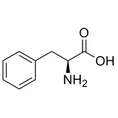
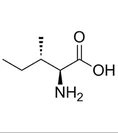
Pharmaceutical-grade amino acids are produced through a variety of methods, including extraction from natural sources, fermentation, and chemical synthesis. They undergo rigorous quality control procedures to ensure purity, efficacy, and safety. The most common amino acids used as APIs include lysine, valine, leucine, isoleucine, phenylalanine, and methionine, among others.

Specification of Amino Acid APIs
We offer the following Product specifications:
|
Name |
Amino Acid L-SERINE |
|
CAS No. |
56-45-1 |
|
Molecular formula |
C3H7NO3 |
|
Appearance |
White crystalline powder |
|
Solubility |
Freely soluble in water, practically insoluble in ethanol (96 per cent). |
|
Density |
1.6 |
|
Refractive index |
1.519 |
|
Specification |
EP/USP/AJI, pharmaceutical grade, bacateria endotoxin and microbial purity can be tested. |
|
MOQ |
25KG/Fiber drum |
|
Name |
L-Alanine Amino Acid |
|
CAS No. |
56-41-7 |
|
Molecular formula |
C3H7NO2 |
|
Appearance |
White crystalline powder |
|
Solubility |
Freely soluble in water, very slightly soluble in ethanol (96 per cent) |
|
Refractive index |
1.460 |
|
Density |
1.2 ± 0.1 g / cm3 |
|
Specification |
EP/USP/AJI, pharmaceutical grade, bacateria endotoxin and microbial purity can be tested. |
|
MOQ |
25KG/Fiber drum |
|
Name |
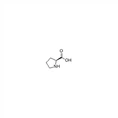
L-PROLINE |
|
CAS No. |
147-85-3 |
|
Molecular formula |
C5H9NO2 |
|
Appearance |
White crystalline powder |
|
Solubility |
Soluble in water, very slightly soluble in ethanol (96 per cent). |
|
Refractive index |
1.487 |
|
Density |
1.2±0.1 g/cm3 |
|
Specification |
EP/USP/AJI, pharmaceutical grade, bacateria endotoxin and microbial purity can be tested. |
|
MOQ |
25KG/Fiber drum |
Application of Amino Acid APIs
Protein Synthesis and Peptide Production
Amino acids are the building blocks of proteins and peptides, which are essential for the proper functioning of our bodies. Amino acid APIs play a crucial role in protein synthesis and peptide production, enabling researchers to develop drugs that target specific biological pathways. By modulating protein synthesis, amino acid APIs can regulate cellular processes, leading to the development of novel therapeutic interventions.
Neurological Disorders
Amino acid APIs have shown promising potential in the treatment of various neurological disorders. For instance, L-Dopa, an amino acid API, is widely used in the management of Parkinson's disease. L-Dopa is converted to dopamine in the brain, a neurotransmitter that is deficient in Parkinson's patients. By replenishing dopamine levels, L-Dopa helps alleviate the symptoms of the disease and improve the quality of life for patients.
Amino Acid Infusions
Amino acid APIs are used in intravenous infusions to provide essential nutrients to patients who are unable to consume food orally. These infusions are particularly critical for individuals with severe burns, malnutrition, or gastrointestinal disorders. Amino acid infusions help maintain protein balance and prevent muscle wasting in these patients, facilitating their recovery and overall well-being.
Cancer Treatment
Amino acid APIs have also found applications in cancer treatment. Targeted therapies, such as antibody-drug conjugates (ADCs), utilize amino acid APIs to selectively deliver drugs to cancer cells, minimizing damage to healthy tissues. The unique properties of amino acid APIs allow for precise drug targeting, enhancing the efficacy of cancer treatments and reducing side effects.

Amino acid biosynthesis is the set of biochemical processes (metabolic pathways) by which the amino acids are produced. The substrates for these processes are various compounds in the organism's diet or growth media. Not all organisms are able to synthesize all amino acids.
Most amino acids are synthesized from α-ketoacids, and later transaminated from another amino acid, usually glutamate. The enzyme involved in this reaction is an aminotransferase.
α-ketoacid + glutamate ⇄ amino acid + α-ketoglutarate
Glutamate itself is formed by amination of α-ketoglutarate:
α-ketoglutarate + NH+
4 ⇄ glutamate
The α-ketoglutarate family of amino acid synthesis (synthesis of glutamate, glutamine, proline and arginine) begins with α-ketoglutarate, an intermediate in the Citric Acid Cycle. The concentration of α-ketoglutarate is dependent on the activity and metabolism within the cell along with the regulation of enzymatic activity. In E. coli citrate synthase, the enzyme involved in the condensation reaction initiating the Citric Acid Cycle is strongly inhibited by α-ketoglutarate feedback inhibition and can be inhibited by DPNH as well high concentrations of ATP.This is one of the initial regulations of the α-ketoglutarate family of amino acid synthesis.
The regulation of the synthesis of glutamate from α-ketoglutarate is subject to regulatory control of the Citric Acid Cycle as well as mass action dependent on the concentrations of reactants involved due to the reversible nature of the transamination and glutamate dehydrogenase reactions.
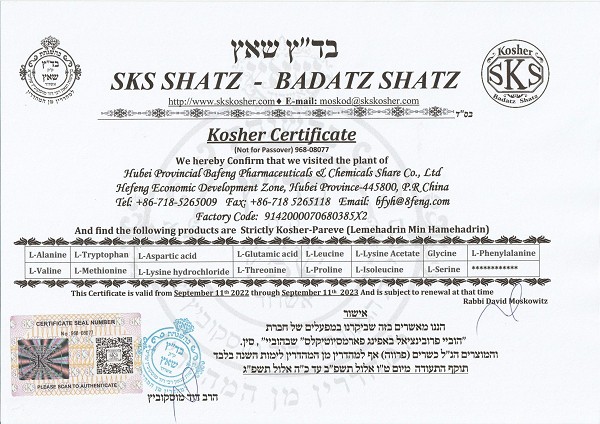
Certificate
Drug Manufacturing License, Writing Confirmation for Active Substance Export to EU, Postdoctoral Station, KEOSHER, HALAL




FAQ
As one of the leading amino acid apis manufacturers and suppliers in China, we warmly welcome you to buy amino acid apis made in China here from our factory. All customized products are with high quality and low price. For more information, contact us now.
Isoleucine USP NF 2023, Lysine Hydrochloride is good for Intestinal health, L Methionine can make IV solution