


Hubei Provincial Bafeng Pharmaceuticals & Chemicals Share Co., Ltd
Hubei Bafeng Pharmaceuticals & Chemicals Share Co., Ltd. (hereinafter referred to as "Bafeng pharmaceutical" or "the company") was established in 1997, which is a national key high-tech enterprise and has become one of the largest medical amino acid Industrialization Bases in China. The company's business scope includes Amino Acid APIs, Amino Acid Preparations, and Amino Acid Derivatives.
Why Choose Us
Rich experience
Founded in 1997, it is a national key high-tech enterprise and one of the largest industrialization bases for medicinal amino acids in China. The company's business scope includes amino acid APIs, amino acid preparations, amino acid derivatives, etc.
Professional team
Established a postdoctoral research workstation, a postdoctoral industrial base, and the Hubei Amino Acid Technology Center, and established long-term industry-university-research cooperation with scientific research institutes such as the Institute of Microbiology, Chinese Academy of Sciences and Wuhan University.
Quality service
We adhere to the quality policy of "quality first, customer first". We have a quality management organization, a complete quality monitoring network and an efficient after-sales service system. The quality management system is constantly improving.
Quality assurance
Construction of quality system is strengthened by formulating quality target, supply necessary resources, reasonable plan, organization and coordination. The purpose is to make sure the certification can be realized smoothly and improve quality system constantly.
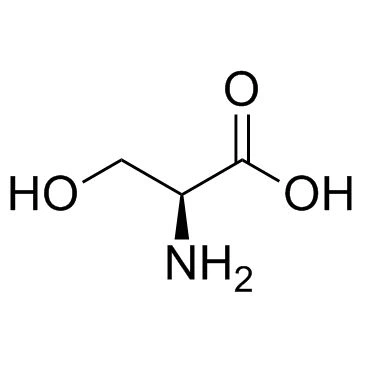
It plays a role in the manufacture and processing of cell membranes, the synthesis of muscle tissues and sheaths surrounding nerve cells.

It can participate in the metabolism of sugar and acid, enhance immunity, and provide energy for muscle tissue, brain and central nervous system.
It is used for protein supplement after malnutrition, protein deficiency, serious gastrointestinal diseases, scald and surgical operations.
It is used for protein supplement after malnutrition, protein deficiency, serious gastrointestinal diseases, scald and surgical operations.

It works with two other high concentration amino acids (Isoleucine and Leucine) to promote normal growth of the body, repair tissues, regulate blood sugar, and provide needed energy.

When participating in intense physical activity, valine can provide additional energy to the muscle to produce glucose to prevent muscle weakness.

4-Hydroxyphenylalanine 60-18-4
Very slightly soluble in water, practically insoluble in ethanol (96 per cent). It dissolves in dilute mineral acids and in dilute solutions of alkali hydroxides.

Amino Acid L-TRYPTOPHAN 73-22-3
Sparingly soluble in water, slightly soluble in ethanol (96 per cent). It dissolves in dilute solutions of mineral acids and alkali hydroxides.

Amino Acid L-Threonine 72-19-5
It has a water holding effect on human skin, combines with oligosaccharide chains, plays an important role in protecting cell membranes, and can promote phospholipid synthesis and fatty acid oxidation in vivo.
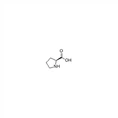
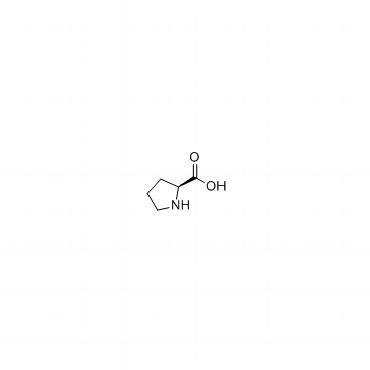
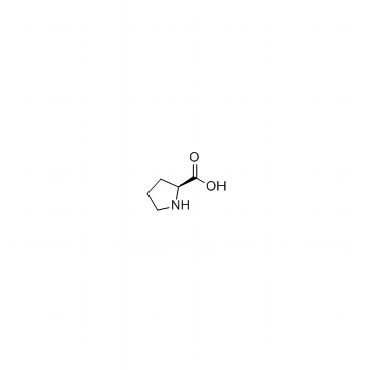
What is L-PROLINE C5H9NO2 147-85-3
L-proline (aka proline) is an amino acid, which is a type of organic molecule used to create protein. Proline is synthesized in the body and also obtained through foods you eat. Of the twenty amino acids, L-proline is unique because it's molecular structure is unlike any of the others. L-proline special configuration allows it to fold in specific ways to form proteins like collagen, making it especially important for healing and maintaining the health of skin and connective tissues.
Benefits of L-PROLINE C5H9NO2 147-85-3
Collagen production
L-Proline is a crucial component in the synthesis of collagen, a protein that provides structure and support to various tissues in the body, including skin, tendons, ligaments, and blood vessels. Supplementing with L-proline supports collagen synthesis and promotes healthy skin, hair, and nails, as well as joint and connective tissue health.
Wound healing
As an essential component of collagen, L-proline plays a vital role in the wound healing process. It contributes to tissue repair and regeneration, helping to speed up the healing of wounds, cuts, and injuries.
Joint health
L-Proline is involved in the formation and maintenance of healthy cartilage, which cushions the joints and promotes their smooth movement. By supporting collagen production, L-proline may help maintain joint integrity, reduce joint pain, and support overall joint health.
Cardiovascular health
L-Proline is known to play a role in the health of blood vessels and the cardiovascular system. It aids in the formation of collagen in blood vessel walls, supporting their strength and elasticity. Additionally, L-proline helps maintain healthy blood pressure levels.
Skin health
Collagen is a major structural protein in the skin, responsible for its strength, elasticity, and youthful appearance. L-Proline supplementation may contribute to the production of collagen, potentially leading to improved skin elasticity and reducing the appearance of wrinkles and fine lines.
Exercise recovery
L-Proline has been studied for its potential role in exercise recovery and muscle repair. It may help reduce exercise-induced muscle damage and promote the regeneration of muscle tissues.
Bone strength
Collagen provides structural support to bones and contributes to their strength. L-Proline is involved in collagen production, which is vital for maintaining healthy bones and reducing the risk of conditions like osteoporosis.

L-proline has the formula C5H9NO2. It is characterised by its unique structure and is a key component of collagen. In addition, its specific structure allows it to give unique shapes to protein structures, influencing their stability and function. L-proline is a key component of collagen.
How Much L-Proline Do You Need Each Day?
The recommended L-proline dosage per day is 500mg 2-3 times daily when taken as an oral supplement. However, the body can make proline on its own, so obtaining it from the diet is not essential-though doing so may provide additional benefits. A typical diet contains about 5 grams of proline daily. The primary sources of L-proline in the diet are protein-rich foods like meat, fish, and dairy, as well as some vegetables, nuts, seeds, grains, and legumes.
A low-protein diet, chronic injuries, and mild to severe illnesses may prevent the body from making adequate quantities of proline. This is the time when you may benefit from L-proline supplements. Specific signs in the skin that might indicate a deficiency of this amino acid is when the skin sores are slow to heal. Chronic joint discomfort that may be a result of degenerating cartilage also indicates that you are deficient in proline amino acid.

The L-proline can form aggregation due to hydrophobic interaction of the pyrrolidine ring. Here are some properties of L-proline:
》L-Prolines are aliphatic and hydrophobic, contributing to the intracellular signalling in biosystems.
》The peptidases that get formed in the process of L-proline-involved biological processes, help in regulating the generation of L-proline throughout its lifetime, in its aminopeptidase P, prolidase forms.
》The HIV-I protease enzyme can lead to the generation of a Xaa-Pro peptide bond formation in the process that can be critical components in several immunological processes.
》The L-proline can display a variety of properties that may not be similar to other lighter molecular weight compounds in its aqueous form in terms of its solubility, density, and viscosity. There is strong hydrogen bonding with water that is observed in proline solutions.
》The L-proline solutions can enhance the solubility of other proteins by enabling a hydrophobic interaction with the protein surface, leading to the rise in the hydrophilic area.
L-proline is one of the two forms of proline. It is biologically active and occurs naturally in the body. L-proline is a type of proline that is used in the production of proteins, including the key protein for health - collagen. In short, L-proline is an actively biological variant of proline. It is the one that plays key structural and functional roles in the human body.
D-proline is the second form of proline, less common and biologically less active than L-proline. D-proline occurs naturally in some micro-organisms, such as bacteria, where it is involved in some specific biochemical processes. In humans, the role of D-proline is significantly limited. Most human enzymes are unable to metabolise it.
Nevertheless, human organisms have the ability to convert a certain amount of D-proline to L-proline by means of appropriate enzymes. Human organisms have the ability to convert a certain amount of D-proline to L-proline by means of appropriate enzymes. D-proline is not common, nor is it actively used in human metabolism.
How to Get L-Proline in Your Diet and Recipes
Drink Bone Broth
To consume more L-proline, it's ideal to drink real bone broth almost daily, which also provides many other nutrients beyond just amino acids. Bone broth is one of the very best ways not only to get more collagen into your diet, but also trace minerals, electrolytes, and beneficial compounds like chondroitin sulfate, glucosamine sulfate and hyaluronic acid. For the most benefits, aim to have about eight to 16 ounces of bone broth per day. You can make your own homemade bone broth using traditional recipes that take one to two days or by consuming dried or powdered bone broth/bone broth protein. Bone broth can be consumed on its own, added to shakes or smoothies, or used it in all sorts of sweet and savory recipes, such as marinades, stews, or even shakes and smoothies.
Take Collagen Powder/Collagen Supplements
You can also use collagen protein in smoothies, shakes or other recipes. I recommend a multi-collagen powder that contains several collagen types, such as types 1, 2, 3, 5 and 10. Each type of collagen has unique functions and benefits, so it's best to supplement with more than one type. Collagen is tasteless, odorless and easy to blend into all types of recipes plus it's gluten-free, dairy-free, nut-free and soy-free. Add some to baked recipes like muffins, bars or pancakes to increase the protein content. You can also use collagen powder just like gelatin to thicken smoothies, desserts or recipes that have a gel-like texture.
Eat Enough Protein and an Overall Healthy Diet
You'll get the most benefits from consuming L-proline and other amino acids found in collagen if you eat a nutrient-dense diet that includes plenty of protein and lots of antioxidants. This is helpful for maintaining higher collagen levels and preventing collagen degradation because it decreases inflammation and free radical damage (also called oxidative stress). You can boost the amount of L-proline you absorb and utilize by eating foods that serve as "collagen cofactors," such as plenty of fresh vegetables, fresh fruits, fresh herbs and spices; various sources of "clean" protein; and foods high in vitamin C, vitamin A, copper and iron.
In Food
L-proline can be used as a nutritional supplement in gelatin foods and desserts, dairy products, and processed meats and vegetables.
In Beverages
L-proline can be used as a nutritional supplement in beverages, such as sports drinks.
In Pharmaceuticals
L-proline can be used in pharmaceuticals.
In Health and Personal Care
L-proline can be used as a fragrance ingredient; hair conditioning agent; skin conditioning agent - miscellaneous; skin conditioning agent in cosmetics and health products.
In Agriculture/Animal Feed/Poultry
L-proline can be used as a nutritional supplement in Agriculture/Animal Feed/Poultry Feed.
Method for Purifying L-Proline
A method for purifying L-proline comprises following steps that:
A flocculant is added into a L-proline fermentation broth, in order to decrease the viscosity of the fermentation broth and precipitate solid impurities rapidly, so that the fermentation broth is separated into sediment and a supernatant, and the supernatant is infiltrated to obtain a first filtrate.
Active carbon is added into the first filtrate in step A, stirred at 60 +-5 DEG C for decoloration, and then filtrated to obtain a second filtrate.
After the second filtrate in step B is condensed and crystallized, liquid carbon for medicinal purpose is added for further dissolution and decoloration, followed by series of filtrations through a secondary filter to obtain a third filtrate.
The third filtrate in step C is frozen for crystallization, in which the filtrate is stirred while being cooled down, with the stirring speed of 40-50rpm, the process of cooling down is stopped when the temperature drops to 6 ti 22 DEG C, and the wet crystallized material is continuously centrifuged for spin drying for 10-40 minutes, and then dried. The method has the advantages of short time, safety and reliability, environment preservation, and simple course.
Eyes: Flush eyes with plenty of water for at least 15 minutes, occasionally lifting the upper and lower eyelids. Get medical aid.
Skin: Get medical aid. Flush skin with plenty of water for at least 15 minutes while removing contaminated clothing and shoes. Wash clothing before reuse.
Ingestion: Never give anything by mouth to an unconscious person. Get medical aid. Do NOT induce vomiting. If conscious and alert, rinse mouth and drink 2-4 cupfuls of milk or water.
Inhalation: Remove from exposure and move to fresh air immediately. If not breathing, give artificial respiration. If breathing is difficult, give oxygen. Get medical aid.
Notes to Physician: Treat symptomatically and supportively.
FAQ
Hot Tags: l-proline c5h9no2 147-85-3, China l-proline c5h9no2 147-85-3 manufacturers, suppliers, factory, 56-45-1, Valine can treat liver failure, 63-91-2, Glycine can be Antioxidant, L Phenylalanine can treat Phenylketonuria PKU , Tyrosine is the main material of beauty needle